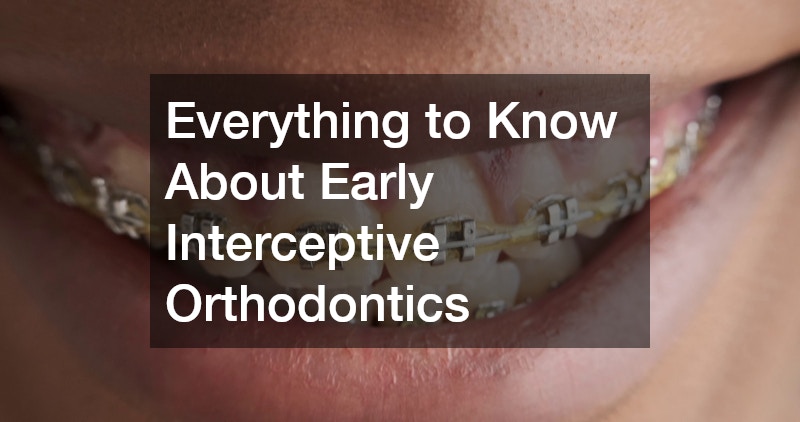

When it comes to helping children achieve healthy, confident smiles, timing can make all the difference. early interceptive orthodontics focuses on identifying and addressing developing orthodontic issues in children before all permanent teeth have erupted. Rather than waiting until the teenage years, this proactive approach allows orthodontists to guide jaw growth, correct harmful habits, and reduce the severity of future dental problems.
Parents often wonder whether treatment at a young age is necessary. Understanding how early care works, who benefits most, and what to expect can help families make informed decisions about their child’s oral health.
What Is Early Interceptive Orthodontics?
early interceptive orthodontics, sometimes called Phase 1 orthodontic treatment, is typically recommended for children between the ages of 6 and 10. During this stage, children have a mix of baby teeth and permanent teeth. Because the jaw is still growing, orthodontists can take advantage of natural development to guide teeth and bone into better alignment.
Unlike comprehensive braces for teens, this phase of treatment focuses on specific problems that could worsen over time. The goal is not always to create a perfect smile immediately, but to establish a healthier foundation for future development.
How It Differs from Traditional Orthodontics
Traditional orthodontic treatment usually begins once most permanent teeth have come in, often between ages 11 and 14. At that stage, treatment primarily involves straightening teeth.
In contrast, early treatment addresses skeletal and developmental concerns. It may involve expanding the upper jaw, correcting crossbites, reducing protrusion of front teeth, or managing severe crowding. By intervening early, orthodontists can sometimes shorten or simplify later treatment.
Why Early Evaluation Matters
The American Association of Orthodontists recommends that children have their first orthodontic evaluation by age 7. Even if treatment is not needed right away, early monitoring allows specialists to detect issues that may not be obvious to parents.
Certain bite problems are easier to correct when the jaw is still growing. Waiting too long can limit treatment options and may require more invasive procedures later, such as tooth extractions or jaw surgery.
Common Issues Identified Early
Some of the most common concerns addressed with early care include:
-
Crossbites (upper teeth fitting inside lower teeth)
-
Severe overbites or underbites
-
Protruding front teeth prone to injury
-
Significant crowding
-
Jaw growth discrepancies
-
Thumb-sucking or tongue-thrusting habits affecting alignment
By correcting these problems early, orthodontists can help prevent abnormal wear, speech difficulties, and even breathing concerns in some cases.
Signs Your Child May Benefit
While only an orthodontist can provide a diagnosis, parents can watch for certain signs that may indicate a need for evaluation.
Visible Alignment Issues
Teeth that appear severely crowded, spaced, or misaligned at an early age may signal underlying jaw development concerns. Difficulty biting or chewing can also indicate a bite problem.
Jaw or Facial Imbalance
If a child’s jaw shifts to one side when closing, or if the upper and lower jaws appear disproportionate, early treatment may help guide growth more evenly.
Oral Habits That Persist
Thumb-sucking beyond early childhood, chronic mouth breathing, or tongue thrusting can influence how teeth and jaws develop. Addressing these habits early can prevent long-term complications.
Types of Appliances Used
early interceptive orthodontics does not always mean full braces. Treatment plans are customized based on the child’s needs and may include removable or fixed appliances.
Palatal Expanders
A palatal expander gently widens the upper jaw to correct crossbites or create space for incoming permanent teeth. Because the upper jaw is still developing in young children, expansion is often more effective and stable at this stage.
Partial Braces
In some cases, limited braces are placed on specific teeth to correct alignment issues or guide eruption patterns.
Space Maintainers
If a baby tooth is lost prematurely, a space maintainer can preserve room for the permanent tooth to come in properly.
Habit Appliances
Devices may be used to discourage thumb-sucking or tongue-thrusting habits that interfere with healthy development.
Benefits of Early Treatment
Choosing early intervention can provide several long-term advantages.
Improved Jaw Development
Guiding jaw growth can help create proper alignment between the upper and lower arches. This can reduce the risk of more serious skeletal discrepancies later in life.
Reduced Risk of Trauma
Children with protruding front teeth are more likely to experience dental injuries. Correcting this early can help protect vulnerable teeth.
Shorter or Simpler Future Treatment
While many children who undergo early care will still need Phase 2 treatment in adolescence, it is often less complex. In some cases, early intervention may eliminate the need for extractions or surgery.
Boosted Confidence
Dental issues can affect a child’s self-esteem, especially during formative years. Addressing noticeable concerns early can improve confidence and social comfort.
What to Expect During Treatment
Treatment length varies depending on the specific issue being addressed. Phase 1 treatment typically lasts between 9 and 18 months. After this phase, children enter a monitoring period where the orthodontist tracks the eruption of permanent teeth.
Once most permanent teeth are in place, a second phase of treatment may begin to fine-tune alignment and bite. Not every child will require two phases, but many benefit from the staged approach.
Regular appointments are essential to ensure appliances are functioning correctly and that progress is on track. Parents play a key role in encouraging good oral hygiene and compliance with removable devices.
Is Early Interceptive Orthodontics Always Necessary?
Not every child requires early orthodontic care. Some alignment issues are minor and can be addressed effectively during adolescence. That is why an early evaluation is so important. It allows an orthodontist to determine whether immediate action is beneficial or if observation is the best course.
The decision depends on the severity of the issue, growth patterns, and overall oral health. A personalized assessment ensures treatment is neither premature nor delayed unnecessarily.
Supporting Your Child’s Smile Long-Term
Healthy oral hygiene habits, regular dental visits, and timely orthodontic evaluations all contribute to a child’s long-term dental health. early interceptive orthodontics offers an opportunity to guide growth in a positive direction, potentially minimizing complications down the road.
By understanding the purpose, process, and potential benefits of early treatment, parents can feel confident in making decisions that support both the function and appearance of their child’s smile. Proactive care during childhood can lay the groundwork for a lifetime of healthy, well-aligned teeth.